The Relative Zen of Age of Empires II
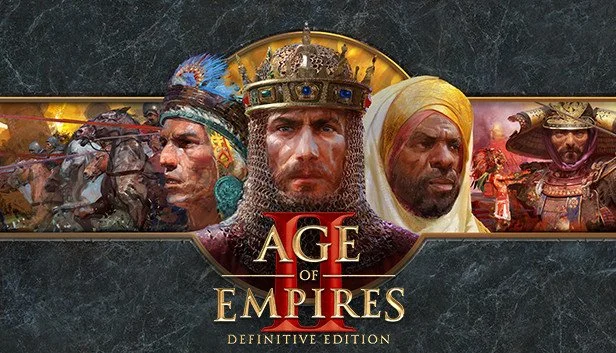
According to the Internet, as well a book I read, "Zen" refers to a school of Mahayana Buddhism emphasizing meditation (zazen) to achieve enlightenment through direct experience, fostering a state of calm awareness, focus, and simplicity. A state of peace, calm and enlightenment sure sounds lit. And that’s how I’ve felt here recently about Age of Empires II, a game I never thought I would be playing a few months ago. It’s not quite zen, but compared to everything going on, it’s relatively zen.
It was a game I had played many, many years ago. I never owned a copy- it was Age of Empires III I ended up getting. A great game, one I would absolutely play now (if they ever remastered it.) But Age of Empires II is the classic. If you can only get one, that’s the one you get. So I did. And as it was downloading, I couldn’t help but wonder if I had wasted $40.
Fast forward about 6 months, I have like 200 hours in the game. Everyday I run one, two, sometimes three of these little simulations, starting from a few settlers and a horseman and building an civilization. There’s something remarkably peaceful about it. Creating more villagers, harvesting more resources, building more outposts, configuring your town and later setting up new ones. It’s like outsourcing some of my favorite parts of Minecraft.
There’s four resources- food, wood, gold and stone. Food helps you make units, wood helps you make buildings, stone helps you make fortresses and new towns and to make military or special units, you often need a mix of food, wood and gold. Those four don’t seem like much, but it’s a sweet spot, allowing you to diversify or specialize depending on the civilization or situation, while also being easy to manage broadly. But you can also micro manage if you like doing that as well. There’s a lot of flexibility in how you can handle resource management.
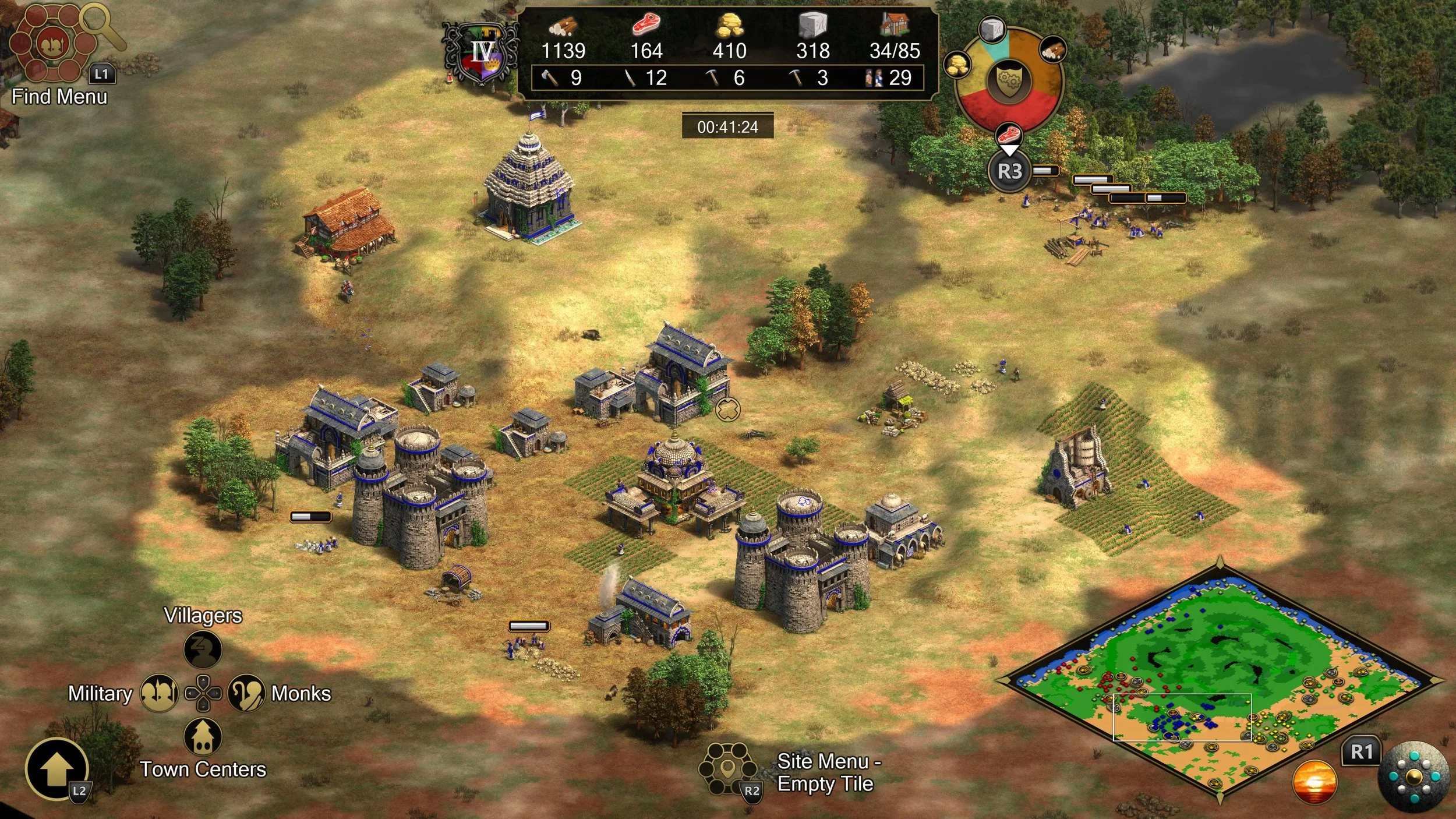
In rocky times recently, it’s been super relaxing to just sit back and watch my villagers work, building a town out of the rugged but beautiful wilderness. I love the map variety of this game too. Even though it’s campaigns are centered on Europe and Asia, there’s still great maps set in the Americas. The semi-random biome, seasonal affects and terrain generation also make each game unique. You may be playing “Baltic”, a map with forests and waterways, but you don’t know if it will be spring, summer or winter. There’s wildlife to hunt, gold to mine, wood to chop- like I said, it’s like Minecraft in that’s there’s always something to do.
Every map and civ has different ways to attack it and while the systems and strategies in this game aren’t limitless, the robustness and versatility of the game loop(s) mean you can win a lot of different ways and even for a game that is built on hard strategy and analysis, there’s a good bit of luck. Circumstance and forethought are ultimately your greatest allies. The single best piece of advice I can give is to be prepared for a calvary charge by the 20 minute mark of every game. Because the first curveball any of these opponents will throw at you is that. A good general rule- be comfortable being uncomfortable. But also try to anticipate how someone might make you uncomfortable. There’s a lot of ways to disrupt and defeat your enemy. Guerilla style strikes on their villagers can slowly set back their economy, a big charge can topple them in one go, or you can trade volleys while building your economy until someone wears down.
The end game is isn’t sprawling and endless but it’s where the toughest decisions are made. It’s perfectly centered on an obvious goal- destroying the other civilizations in the game. This is probably where much of the overt strategy lies. Do you engage early, amass forces late and storm your opponents or do a little bit of both in piecemeal fashion? It’s up to you and will probably be completely situational. It’s also a little map dependent. One of my favorite things about the game so far is learning the little nuances of how to approach each map. Some are very straighforward and don’t require any specialized strategies. Others…well they can put you in a bad situation dependent on your spawn.
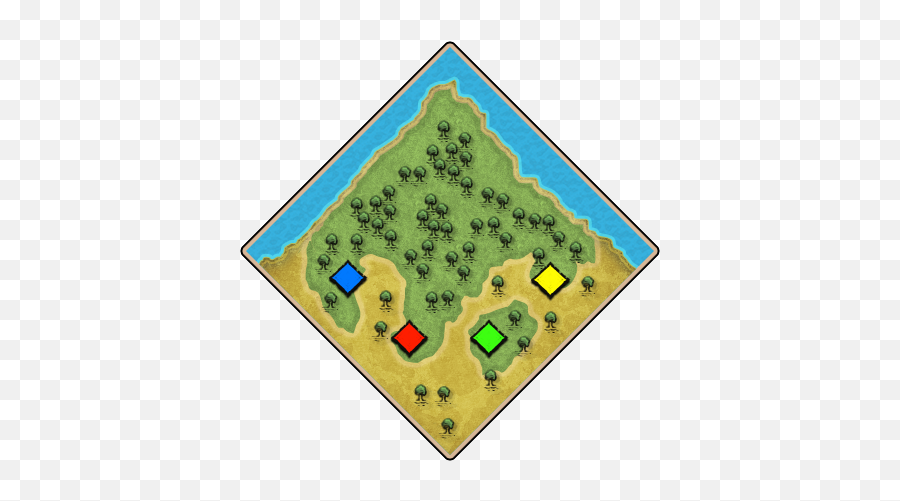
Consider this map, Coastal Forest. If you spawn on the outskirts (blue or yellow), you have access to the coast line immediately. This means fish, a navy, as well as broader mobility around the map because you don’t have to risk traveling through other civs to explore. But if you spawn on the inside of these two (as I did many times), it’s much more difficult. For one, you’re far away from the water. Secondly, you have two opposing civilizations bordering you and all your resources can/might be tapped by them. For example, everytime I play this map and start in the interior, I have to get wood from the forest which is further up in the map. This means a lot of my villagers are kind of isolated away from the protection of my town, making them vulnerable to being picked off by enemy units. This can be very annoying and resource draining because small groups of enemies can damage your economy by killing your villagers and at the same time, you have to also use resources to eliminate the threat.
After a few rounds of getting my ass kicked like this, I finally settled on being uber aggressive, attacking and eventually wiping out the blue civilization early on, which gave me access to an entire coast and half the map. This not only gave me some breathing room to build and access to water, it also left the other two civilizations fighting for resources in the other half of the map. And that’s the kind of advantages that have you winning the round 20 minutes before you actually do it. Resource creep is a real thing in both directions. There have been many rounds where I have looked at my economy and realized I was going to lose. But this time, after taking over half the map, I was able to build an army that seamlessly swept through the other two civilizations. If anything, it was too easy- I had been hoping to expand my economy further and build infrastructure. Instead I just rolled to victory, which was forced upon me by the aggression of my opponent.
One thing I’ve learned so far is that winning in this game is alright but what you really don’t want is to lose. I can bide my time winning, but if you’re getting attacked and are forced to play on slim margins under constant duress, that’s no fun. It can be a challenge and is doable, but more times than not, if you really get on the back foot, it’s over. It’s unlikely that you would be able to recover if you don’t have the right infrastructure set up and odds are, if you did, you would be winning. That’s not to say comebacks or swings don’t happen, but past a certain point, you are who you are. and there’s no point in prolonging losing, because it’s just not as fun.
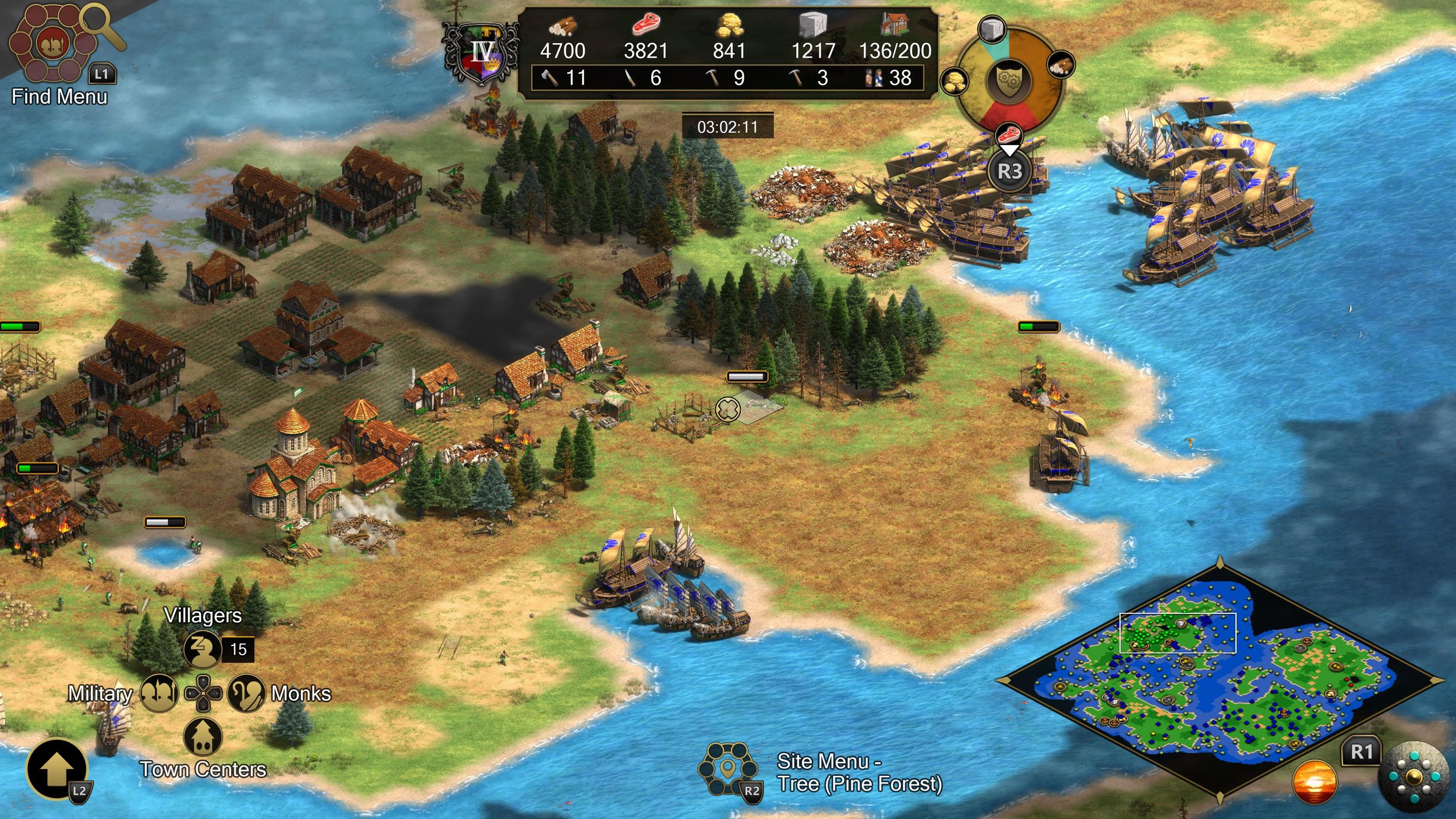
Both zen and frustrating, depending on how it’s going, are water maps. Water maps are really fun, but, especially when an actual ocean is involved, not well optimized. If you are on an island and it runs dry on a resource or two, your villagers will just stop working and try to “walk” to the next island, meaning that after a while, half your economy is dormant after a while. And micro-managing at that level is nigh impossible if you’re in the late game. In reality, the way you win these maps is aggressively expanding your economy into other landmasses and gaining naval superiority. The civilization I play as, the Dravidians, are one of the best in the game on the water, so this part is more a question of resource management than anything else for me.
The real difficulty in these maps is in how tedious they can be. As long as I make it to the late stages and aren’t completely blockaded, I can usually get back on my feet as long as I can build boats at scale late in the game and retake the water. But even when/if you retake the water completely, the game will just drag on because now, with no docks or boats, the opponent(s) can just turtle on the landmass. So you have to board them and they have all resources allocated to land defense so it becomes a meat grinder, but you will eventually exhaust their resources, it will just take a while.
The substantial variance in how the game plays depending on what map you’re in is one thing that makes the game interesting, but also not one you want to schedule in unless you’ve got serious time. Sometimes I’ve run a game in 45 minutes, everything running smoothly. But then you get into these total war/meat grinder conflicts where it’s just constant, hours log battle. This is when the game is most tense, but also most boring- you’re likely to get stuck like that for a while unless you can do some meaningful damage, but if both economies are roughly equal, it can be hard to gain an upper hand or have the confidence to pull back and assemble a larger force.
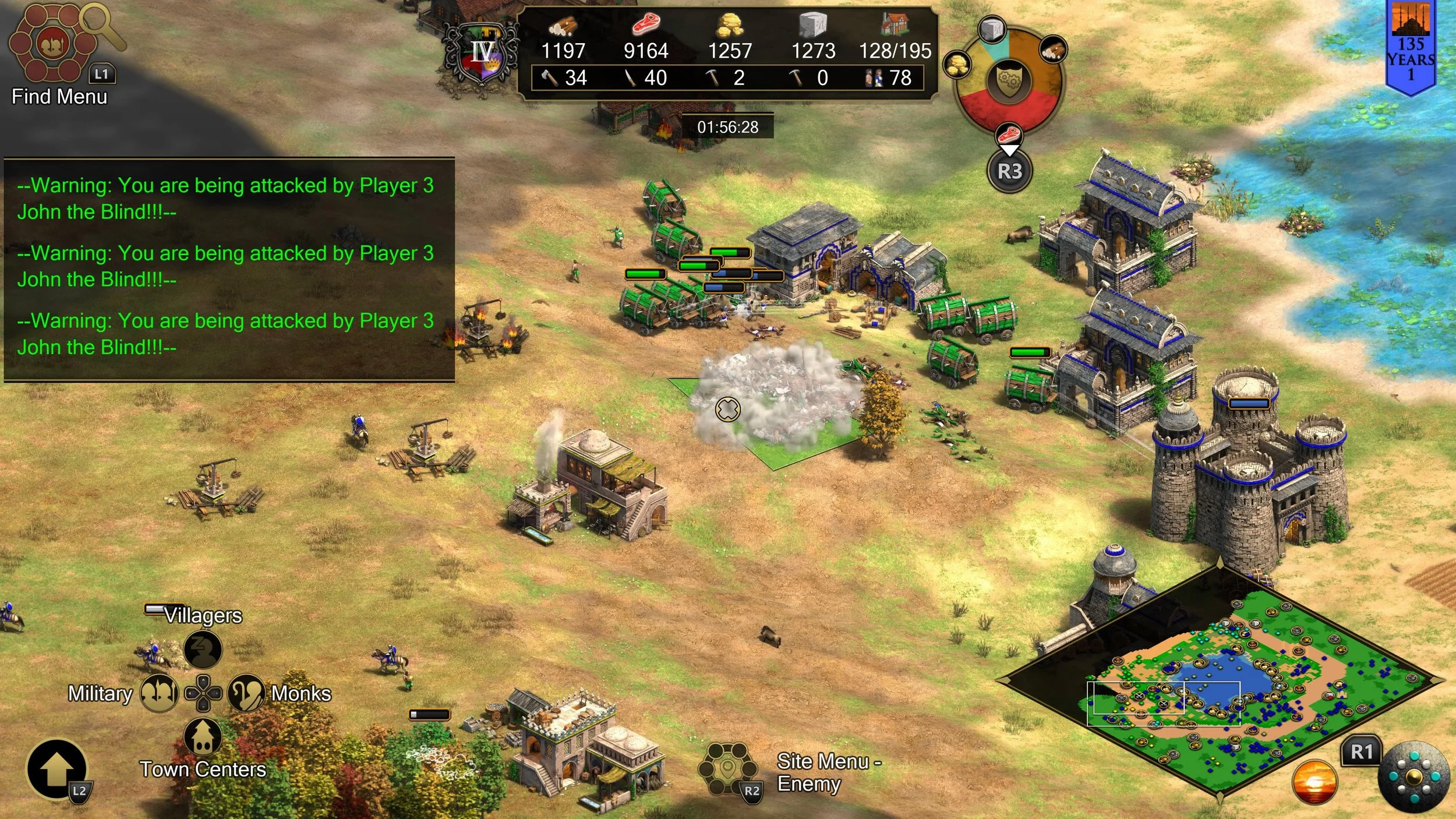
Age of Empires II thrives when it puts you in different situations. The game loop isn’t that complex once you come to understand it, but no game is the same. The race between your mastery of the systems and the unpredictable strategies of your foes keeps you on your toes at all times. It’s a game where pacing is key, but you never know what pace you need to be on. You’re always caught between advancing your own economic or military agenda and reacting to what you think your opponent might be doing. But paradoxically, for much of the round, this allows you to just relax and go about your routine.
This game just feels exceptionally balanced, with softer game loops such as trade, infrastructure layout and economic strategy woven in with military and exploratory elements. On their own, a lot of these elements might feel a little underbaked. This is an older game after all, and things were rarely as complex as they are now. But in this one, it provides what feels like the perfect amount of engagement and delegation, allowing you to intimately manage all the complex systems…at an accessible distance. There’s automation options, but everything can be done manually and the AI is good at reading into minute adjustments and figuring out what you want.
Age of Empires II may be an older game, but it’s a classic for a reason. Gameplay this good doesn’t do anything but age well and ultimately this a masterpiece of precision. Everything is almost perfectly balanced and the variation presented with map and civ choices, overlayed over the meticulously constructed gameplay loop to craft a game you’ll want to keep playing long after you’ve sworn you’re sick of it. So if you have $40 lying around to try something older but golder, this might be the game for you.