Victoria 2 Rewired My Brain In 2026
If you were the controller of a country, what would you do? Obviously you’d want to get rich. You’d probably want to be prestigious. You’d probably like to have the clout of inventing something. Invade your neighbors or make friends? Or maybe invade some distant land? But what about your political system? Your economic policy? Religion? Culture? This is a lot of words. Maybe this whole thing is more complex than I thought. Maybe I should play as a small country so it’s easier to manage. But then a big country could conquer you or turn your country into a vassal state. Decisions decisions.
Welcome to Victoria 2, where you have to handle these problems from 1836 to 1936, a wonderful sliver of history that encompasses industrialization, colonialism (specifically the race for Africa), the American Civil War, a bunch of European wars, the formation of Germany and of course, WORLD WAR I!!!! These things are far from inevitable however. And in Victoria 2, your own self determination and cunning decides how far you can go as a nation.
There’s a lot of games that are really intuitive for gamers both holistically and conceptually. Not this game at all. To play this game well, you have to play badly for around 100 hours. If you’re extremely schooled in geopolitics, history, economics, state politic and military stratagem, you can probably effectively play this game in about 70 hours. It took me about 80 to 90 hours to really know how to run a country. There are some countries that are a bit more straightforward and can be used to figure out different systems. The Netherlands is great as a starter because you have rich colonial holdings in Indonesia that also have valuable resources (RGOs) that you can feed into your industry back home. They also don’t have many natural rivals but can fund a solid military and have a good education base for industry and technological advancement.
Education is a big part of Victoria 2. Look at Japan, who I have been playing as recently- their high literacy rate allows for them to soar in the late game as they Westernize and develop better technologies. They start out as an “Unciv” or uncivilized nation and spend at least the first 20 years slowly creeping towards Westernization. What does it mean to be Westernized? Well it means you can do research, which allows you to develop “tech.” The reason it’s in air quotes is because tech isn’t strictly technology- it can be ideology, economic policy or cultural emphasis. Ideology can change your governmental style or influence politics, allowing you more control over industrial levers and material conditions, economic policy can improve the efficiency of your administration by making you more tax revenue and cultural techs can give you “Prestige” points. What are “Prestige” points?
Victoria 2 is something of a sandbox, but if there was a goal, it would be to improve your nation’s global ranking, preferably striving to be a top 8 power. Global rankings are decided by one’s Total Score, which is a composite of three different scores: Prestige, Industry and Military. Their are a ton of factors at play as to what the score might on average be for any given nation, but in general, they can each be heavily influenced by the player’s decisions.
Prestige is probably the most nebulous one. In general, the Prestige mechanic is meant to represent this idea of clout and influence between countries. It’s connected to your other scores obviously- winning wars (which require high military scores) and making social or technological advances (requires literacy/industrial score) give you prestige, but you can also just get Prestige passively, the amount changing depending on certain variables. I’m not entirely sure how it works and I’m sure most other Vic 2 players are in the same boat, but the gist of it is that a country like Denmark, which is militarily and industrially limited by it’s size, can have a higher prestige score than a country like Persia, which in theory is stronger. European and North American countries and Japan all do well in regards to getting prestige.
Industrial score is a little more straightforward on it’s face, but influencing it is a little complicated. It general, it’s a number that assigns a single value score to your economic production. It’s related to how many factories one has, but just spamming factories and infrastructure won’t boost it as much as having those factories be productive. Industrial score is also a game element that, when done well and with economic strategy, can seem a little counter-intuitive and can sometimes require strategic sacrifices in other areas. Two examples of this would be: lowering taxes and military spending to allow for more consumption (necessitating more supply) from your population, another would be taking out big loans late in the game to remove money from your treasury and inject it into the economy to get additional currency flowing through the system. The Victoria 2 economy is very complex, only somewhat realistic, a little buggy and not very well modeled even after all these years. This is a score you can only really seek to raise efficiently once you’ve played the game a while.
Military score is easily the simplest to understand and easiest for the player to affect. It’s a combination of your army size, navy size, army budget and consumption and navy budget and consumption. This can all be maximized by moving a few sliders and building out all potential troops. And boats. Build lots of boats. If there’s one universal equalizer in Victoria 2 for the majority of playable nations, it’s that the AI is terrible at using navies. I’ve won many wars against European powers by simply defeating poorly constructed naval fleets. For example the Netherlands once sent an unprotected troop fleet with a large amount of troops to retake Indonesia when I invaded it as Afganistan. They had a sizeable Pacific Army of like 45,000 troops. The problem was, when my very solid battle fleet met them off the coast of Moluccas, I was able to sink the entire fleet, killing their whole army before it landed. In general this is how you beat much larger empires-by constricting their land based military advantage by destroying their logistics via naval power. If you’re Japan, you may not have a bigger fleet than the British. But you have a much bigger fleet in the Pacific and this can be enough to ward them off.
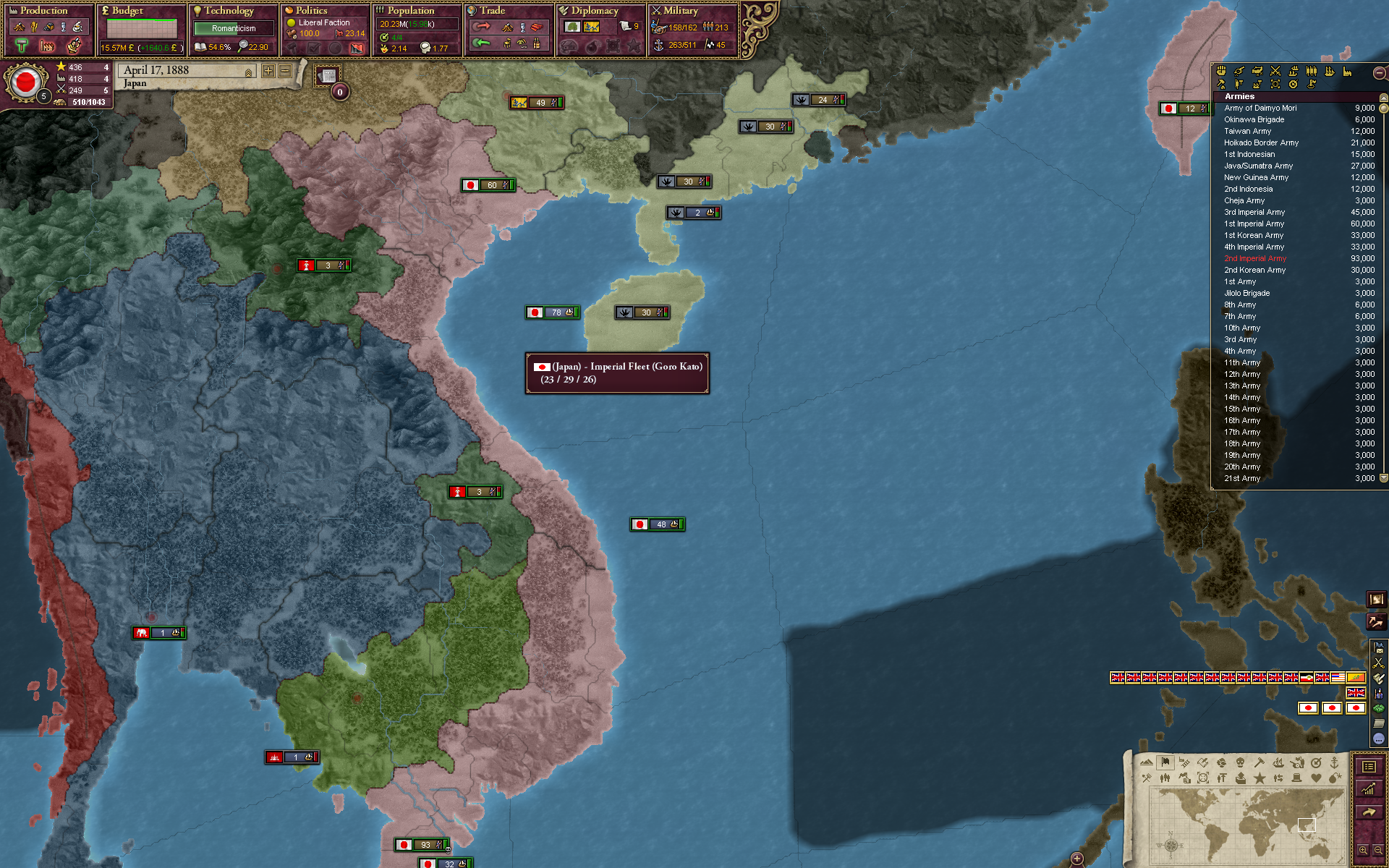
And that’s the gist of how you play and win the game. Those three scores form a total score that determines your rank. It’s always nice to be #1, but you can have really fun games without being #1- taking a country like South Africa from 50+ to #15 or something like that can be tremendously satisfying in it’s own right. A lot of players, me included, like to role play nations based on their historical ambitions as well. For example, that first picture in this piece is from a game where I tried to recreate the Japanese Asian Co-Prosperity Sphere from the 1930s, which included the Phillipines, parts of China, parts of Vietnam and Indonesia.
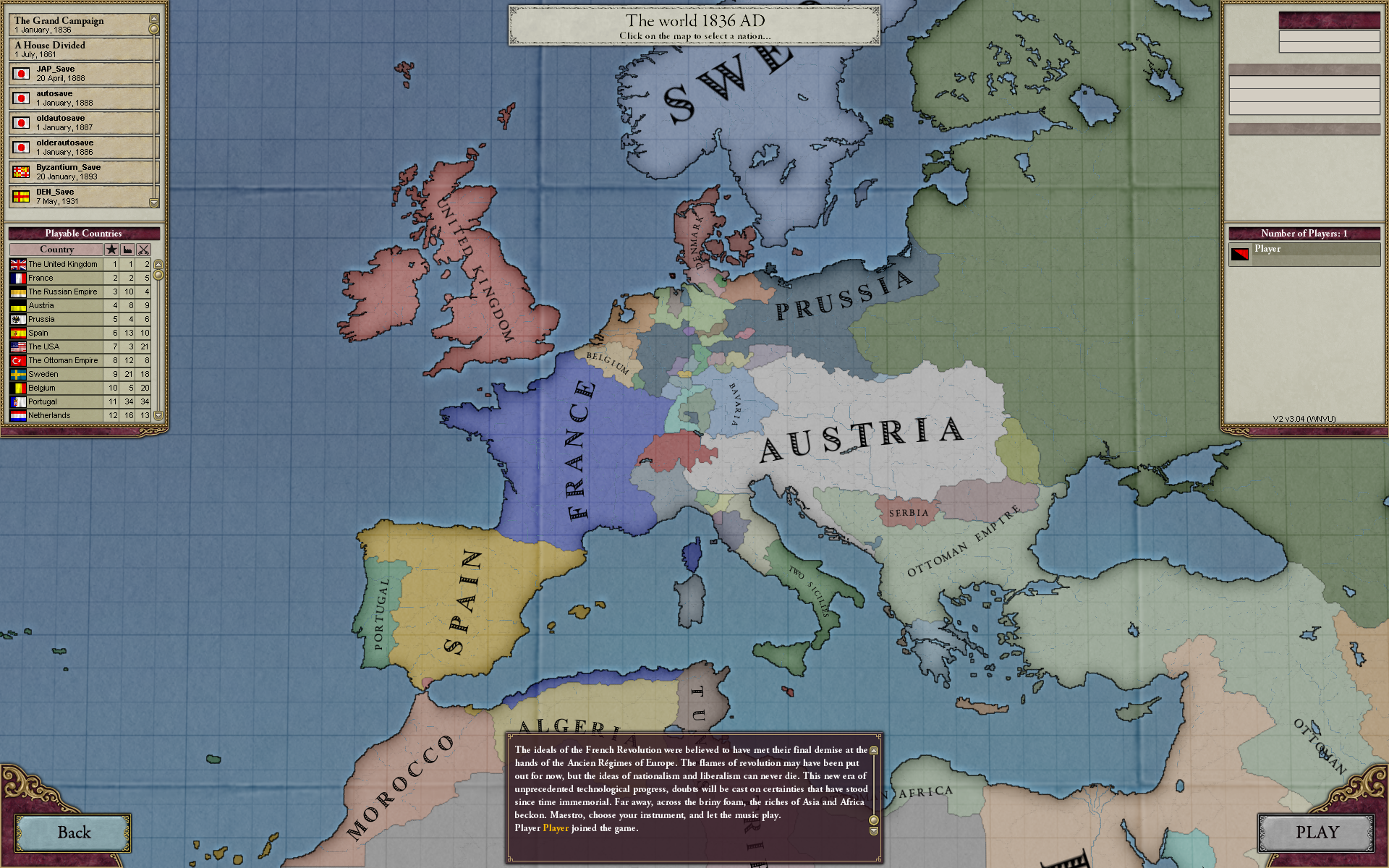
Every nation offers different strengths and weaknesses and there’s so much variety in the game depending on who you play.
The United Kingdom is pretty much a powerhouse in every department, has lots of land on every continent from the start and has a highly educated, industrialization ready population.
The United States has a strong literacy score and great prestige, with high potential industrially and militarily, which it will almost always grow into to be top 4. You get to fight Mexico for western states, fight the Confederates, but otherwise there’s not a lot of need to fight wars. Since it doesn’t border any massive threats, you won’t be invaded. It can be a very boring game.
Germany is great if you want to focus on European mainland domination- they have a big army and a large educated populace, bordering Russia, France, the Netherlands,Belgium and Austria.
Russia has a massive military and borders a ton of countries in Europe and Asia but it’s tough to industrialize, especially to do so quickly.
Japan starts as an uncivilized nation, but can quickly Westernize and become a Eastern powerhouse, but it’s not really close to the action in Europe and it needs to start it’s own battles most of the time to get something going.
Austria is a war zone, bordering 4-5 countries at any given time who have an incentive to take some piece of land they have. They’re a very powerful country, but their near maximum exposure usually leaves them hollowed out militarily and population wise by the end of the game.
Spain has some cool colonies and is in a decent situation from the start and has a very solid floor, but it’s literacy rates and the economic cost due to the scale of it’s empire relative to it’s population makes it tricky to elevate.
France is probably the most versatile country. Large colonial empire it can afford because it has a large educated population, is on the European mainland, but also well positioned to fight on other continents and has the military size to do these things.
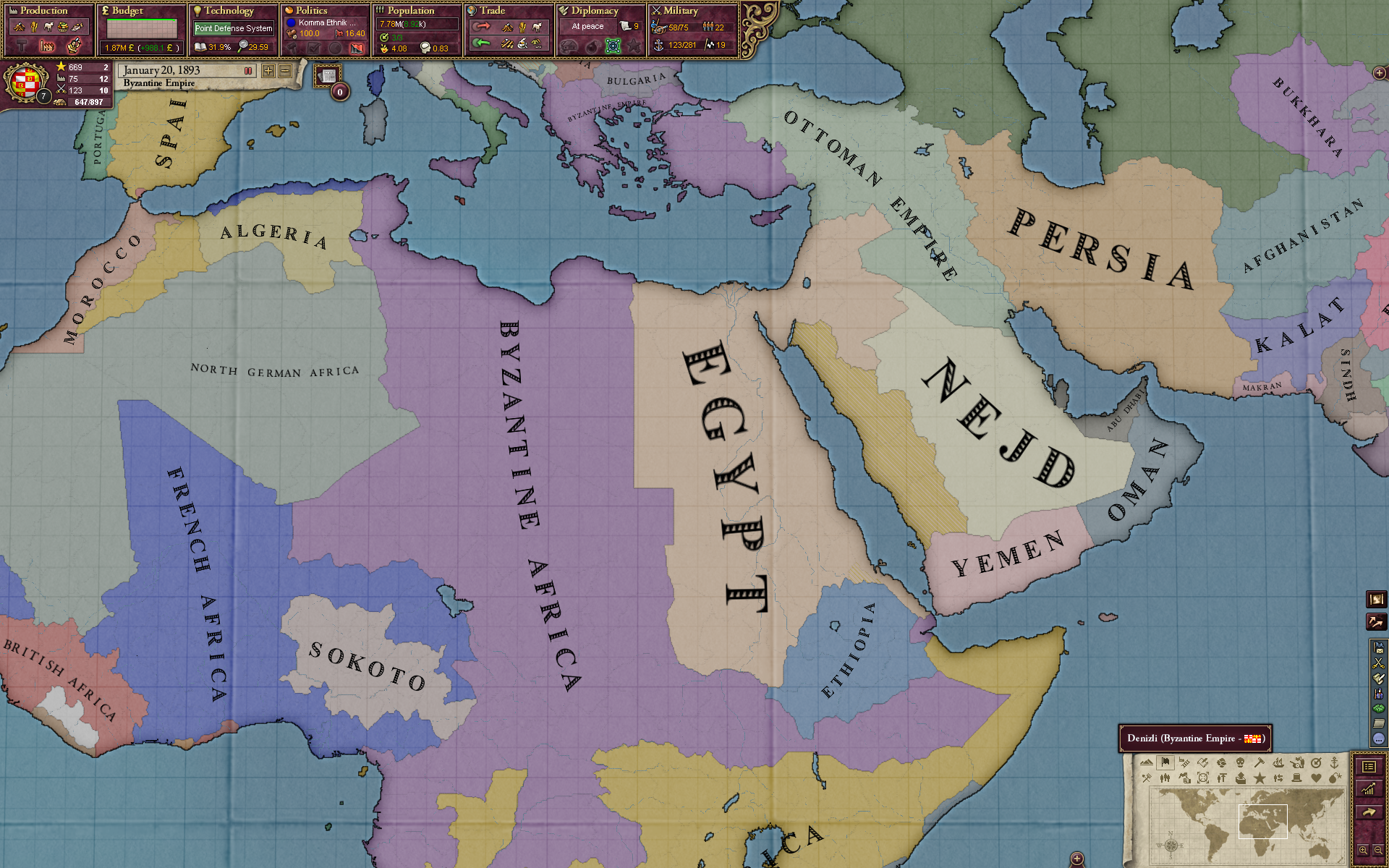
In general location heavily affects the type of game you’ll have. A North American game is usually watching the United States slowly take land from Mexico and grow it’s military and economy as it expands throughout the country. A South American game will usually involve a bunch of cruddy little land wars for this or that strip of jungle, beach or mountain. Europe is usually very chaotic and really the heart of the world. The Middle East is a grab bag of sparsely populated and poorly defended land that will be very valuable late in the game when oil is available. Africa requires colonization, which is only available to top 16 nations. There are some countries you can play in Africa, but you’ll likely be consumed by a European power or end up land locked. Asia is interesting because it relies on three big factors: where is China in it’s development, how imperialistic does Japan wanna be and is either one allied with Russia?
Some countries do seem to play specific roles within the game. For example the UK is like the world’s policeman and will randomly invade you if you start taking too much territory from a country they’re on good terms with. To get any land in South America or the Carribean, you’ll have to deal with the US Navy. China is also very defensive of Asia and has so many people it’s always a power player militarily in the region. Brazil and Argentina are also often very aggressive and expansionist if they become powerful enough.
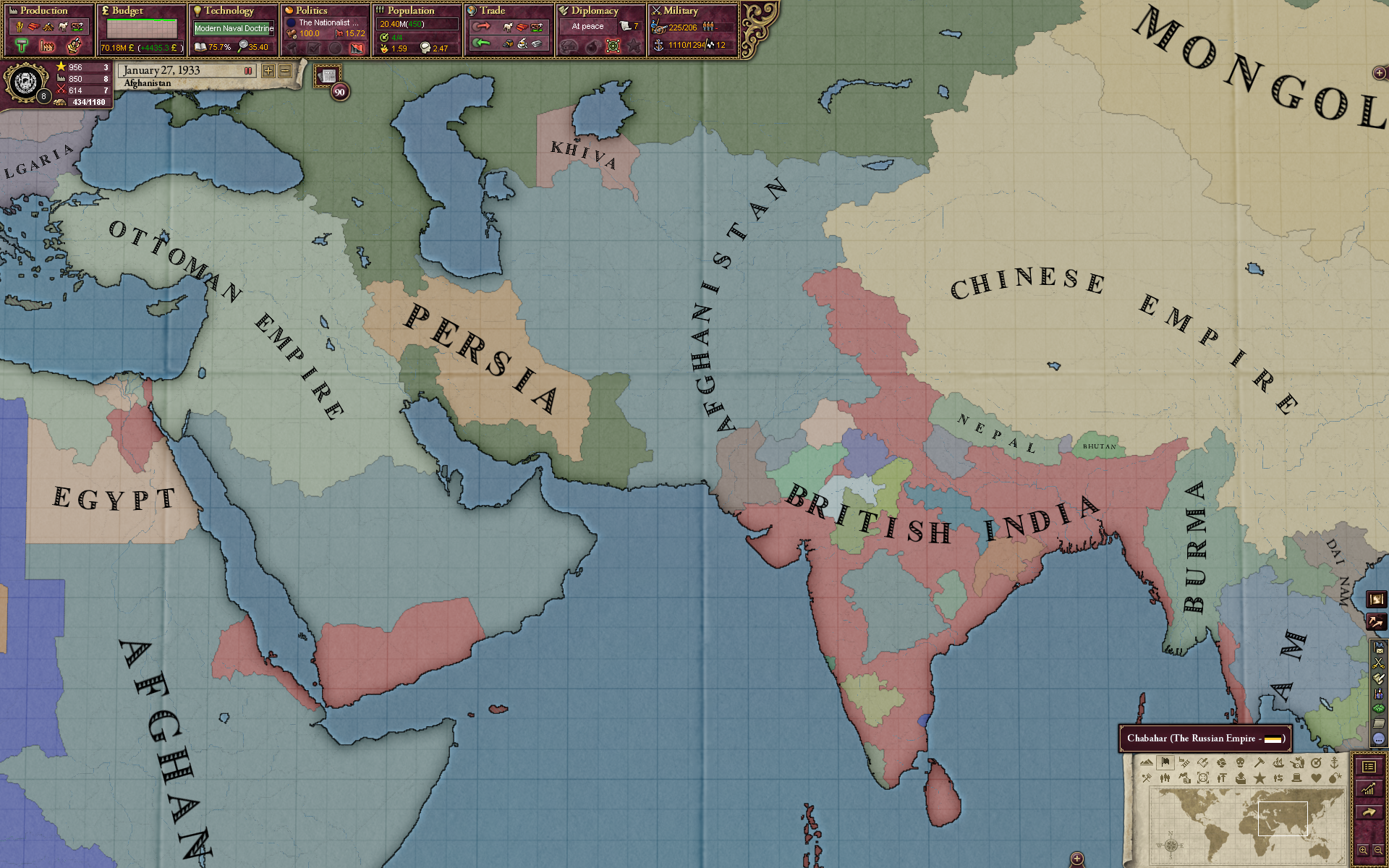
This is an older game and it has the quirks of that era. Some of the systems feel overly complicated or sometimes too hands-off, sometimes the balance between automation and control leave the player overstimulated or conversely bored. But someone who can sit in there and master the flow of the game and learn how to influence these systems can find themselves wielding an immense amount of control over something that really can feel akin to running a nation state. There are things that Victoria 2 does that other games do better, but no game does all of these things in unison as well as Victoria 2. It’s a game about 18th/early 19th century imperialism and it’s influence on economics, politics and industrialization and no game captures this idea like this one. Your ability to succeed through democratization on the home front and ruthless imperialism abroad is well reflected in the game’s systems and you are rewarded when acting in the manner a nation in that era probably would.
I already said this is an old game, but one thing older games have is a community and this game has an excellent modding and overall community. Vanilla Victoria 2 can feel a little empty after you get the swing of things but this is easily rectified through modding. Some mods, such as the Greater Flavor Mode (GFM) and the Historical Project Mod (HPM) add new events, countries and other content to the base game and follow historical events and situations a little more closely. Other ones simulate different eras entirely, such as the Cold War Era (CWE) mod, which goes from 1946 to 2092. There’s a lot of great Victoria 2 content out there once you master the main game.
And mastering the game is a big thing I’ve been doing this year. It’s a truly remarkable experience that I feel has changed the way I view the news and everyday life. It’s like a lesson in history, demographics, economics and culture all in one and it’s a fun videogame on top of it. It’s truly awesome to find something great you didn’t know you needed and you didn’t even think would exist, but that’s been Victoria 2 for me this year. I’m at around 600 hours and counting. It’s a game I think people who like this blog might find interesting and I was very excited to write about it. So if you have Steam and you want to take a run a legendary grand strategy classic, Victoria 2 is one you have to try.